CATNIP: Evaluation of Comprehensive Assessment Techniques and Novel Indicators of Progression in Feline CKD Study.
Principle Investigator
Autumn N. Harris and Shelly Vaden
Description
The objective of this study is to evaluate novel technology indicators of CKD progression in cats. This evaluation will include cats with Stage 2 or Stage 3 CKD, as well as healthy non-CKD controls. Your veterinarian will determine if your cat is eligible for study and included in one of these categories. There are a total of five study visits. At each study visit, your veterinarian will examine your cat. Blood and urine samples will be collected to monitor your cat’s health. Your cat will also undergo procedures to evaluate CKD progression, including ultrasound and a glomerular filtration rate (the gold standard for CKD evaluation). You will also be asked to complete a questionnaire about the health status and the quality of life of your cat at each visit.
Testing Requirements
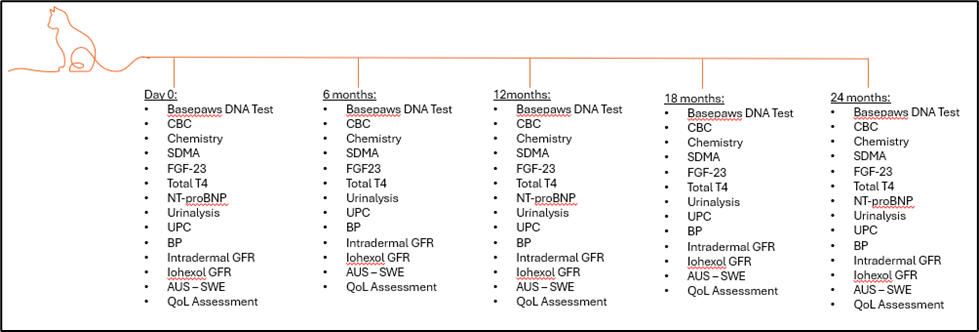
A summary of anticipated events is presented in the diagram below. No changes in medication or diet should be made during the study without discussing first with the study team.
Enrollment Start
01/01/2026
Enrollment Finish
01/01/2029
Eligibility
Inclusion criteria:
1. Cat is ≥ 2 years of age and ≥ 2 kg at enrollment.
2. Diagnosis of non-CKD, Stage 2 or Stage 3 CKD based on the following:
a. Non-CKD
~ Appropriate urine concentrating ability (USG > 1.030)
~ No known history of AKI or exposure to nephrotoxic drugs or infectious diseases associate with renal pathology.
~ sCr < 1.6 mg/dL
b. Stage 2 CKD
~ Serum creatinine (sCr) concentration ≥ 1.6 mg/dL but < 2.9 mg/dL in a hydrated, stable patient, or, if sCr concentration is < 1.6 mg/dL, serum SDMA concentration must be persistently ≥ 18 µg/dL.
c. Stage 3 CKD
~ Serum creatinine (sCr) concentration ≥ 2.9 mg/dL but < 5.0 mg/dL in a hydrated, stable patient, or if sCr concentration is < 2.9 mg/dL, serum SDMA concentration must be persistently ≥ 25 µg/dL.
3. If the cat requires standard of care for CKD (including a renal diet, etc), then the cat must be receiving these therapies for at least 4 weeks prior to enrollment.
4. Cats must be suitable for study when examined physically at enrollment. Any known or suspected concurrent disease are well controlled. Cats diagnosed with hyperthyroidism prior to or at the enrollment visit require a minimum of one month on treatment before continuing on study.
Flyer
Contact
For more information, please contact the Harris Lab at [email protected]
- Categories: