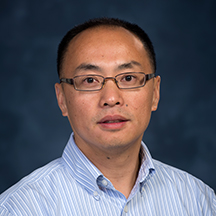
Xinxia Peng
Bio
I am a Professor in the Department of Molecular Biomedical Sciences, and a member of NC State Bioinformatics Research Center. I received my PhD in Computational Biology and Bioinformatics from the University of Tennessee – Oak Ridge National Laboratory Graduate School of Genome Science and Technology, under Computer Science Professor Dr. Michael Langston. I started as a Bioinformatics Manager at Seattle BioMed (now Center for Global Infectious Disease Research) after graduation. In 2008 I joined the University of Washington Department of Microbiology as a Computational Research Scientist, and was promoted to a Research Assistant Professor in 2012. I moved here at NC State in July 2016 as one of the Dean’s Faculty Excellence cluster hires, in the field of “Translational Genomics of Infectious Diseases,” and to be part of the Bioinformatics Research Center. I was named as one of NC State’s 2025-26 class of University Faculty Scholars in 2026.
For additional information please visit our lab website: https://penglab.cvm.ncsu.edu
CERTIFICATIONS
Ph.D., Life Sciences: Computational Biology and Bioinformatics, University of Tennessee – Oak Ridge National Laboratory Graduate School of Genome Science and Technology, Oak Ridge, TN, 2005
M.S., Computer Science, University of Tennessee, Knoxville, TN, 2004
M.S., Foods and Nutrition, University of Georgia, Athens, GA, 2001
M.S., Biochemistry and Molecular Biology, East China Normal University, Shanghai, China, 1999
B.S., Biology, East China Normal University, Shanghai, China, 1996
Area(s) of Expertise
BIOINFORMATICS / COMPUTATIONAL BIOLOGY, GENOMICS / GENETICS, IMMUNITY / INFECTIOUS DISEASES
Noncoding RNA: immunity, target identification
Microbiome: immunity, disease progression, vaccine efficacy
Complex immune genes: genetic variation, transcriptional regulation
Genomics for model systems: non-human primates, ferrets, hamsters
Publications
- 380.7: Peripheral T cell transcriptomic profile is altered in non-human primate kidney transplant recipients treated with ECDI-fixed donor B cell infusions.. , Transplantation (2026)
- Assessment and development of computational strategies for assembling the human FCGR2/3 locus using Nanopore long-read sequencing data 2309911 , The Journal of Immunology (2026)
- Characterization of H1N1 and interferon-β-responsive long non-coding RNAs using single-cell CRISPRi in human lung epithelial and immune cell lines 2260688 , The Journal of Immunology (2026)
- Development of genomic resources and assays for immune repertoire profiling in Syrian hamsters , The Journal of Immunology (2026)
- Exploring gut host—microbiome interactions associated with RhCMV/SIV vaccine efficacy against SIV in rhesus macaques 2257552 , The Journal of Immunology (2026)
- Identification of functional noncoding variants regulating Fc gamma receptor expression in human natural killer cells 2260713 , The Journal of Immunology (2026)
- Identification of lncRNA VILMIR-protein interactions within the host interferon response 2257841 , The Journal of Immunology (2026)
- Investigating Functional Mechanisms of Noncoding Genetic Variations in the Human Fc Gamma Receptor Locus 2260728 , The Journal of Immunology (2026)
- Leveraging Advances In Long-Read Sequencing to Improve Analysis of Host Immune Responses 2332674 , The Journal of Immunology (2026)
- Mycoplasmal endosymbionts of Trichomonas vaginalis are associated with reduced risk for Chlamydia trachomatis endometrial infection in asymptomatic, coinfected, women , bioRxiv (Cold Spring Harbor Laboratory) (2026)
Grants
IgG Antibody (Ab) based therapeutics are becoming more common in treating several diseases, including infections, autoimmune disorders, transplant rejection, and cancer. Abs contain two important domains; the Fab domain mediates binding to a specific antigen, and the Fc domain of an antigen-bound IgG Ab then binds to Fc-gamma receptors (Fc���Rs) expressed on the surface of different immune cells (e.g. NK cells, monocytes)and thereby initiates a broad array of effector functions related to target cell destruction, such as antibody- dependent cellular cytotoxicity (ADCC) and antibody-dependent cell-mediated phagocytosis (ADCP). However, Ab-based therapies are complicated by what appears to be suboptimal efficacy in a significant number of treated patients. A potential cause for this variability in response to Ab treatment could lie in genetic differences in the Fc���R locus, which is highly diverse genetically, with (at least) > 20,000 reported single nucleotide polymorphisms (SNPs) plus additional copy number variations (CNVs). Considering the extreme genetic complexity of the Fc���R locus, we have established a high-throughput assay to systematically screen for functional SNPs in the Fc���R locus. Based on the existing literature and our own results, we hypothesize that Fc���R polymorphisms modulate Ab functions across individuals, i.e., the same Ab but with different efficacy, by differentially regulating expression patterns of Fc���Rs in a cell type-specific manner. Here we aim to systematically identify the functional impact of genetic variations in the Fc���R locus. Aim 1: Identify functional SNPs in the Fc���R locus that regulate expression of Fc���Rs in human effector cells, and regulatory proteins binding to each SNP. Aim 2: Use the identified Fc���R SNPs and interacting proteins to derive predictive models for ADCC and ADCP activities. Ab based immune suppressions are routinely used to prevent transplant rejection and often function through ADCC and ADCP based mechanisms. We will enroll a group of 100 transplant patients in parallel with Aim 1, collect blood samples before transplant and measure their ADCC and ADCP activities in vitro. We will build computational models that predict ADCC and ADCP activities in individuals using their Fc���R genotypes alone, and together with other variables. Aim 3: Determine the impact of Fc���R genotypes on the efficacy of Ab based immune suppression regimens. After receiving Ab based depletional induction for transplantation, we will assess the contributions of these patients��� Fc���R genotypes and additional variables to the differences in their depletion efficiency. The expected outcome is to systematically identify functional SNPs in the human Fc���R locus and their impact on Ab based immunosuppression. This knowledge will further contribute to differentiating mechanisms of antibody-mediated rejection in transplantation and its treatment.
Dr. Peng and members of his laboratory will conduct Total RNA transcriptome deep sequencing (Total RNA-seq) analysis of RNAs from cervical samples provided by the UNC team. Dr. Peng and his group will use the generated Total RNA-seq data to profile host, pathogen and microbiota transcriptional responses promoting or protecting from ascending chlamydial infection or subsequent reinfection in women. His group will process the raw RNA-seq data including quality control and provide the management and dissemination of the generated large scale RNA-seq data.
Childbirth at advanced maternal age (i.e., ���35 years old) is associated with increased risk of adverse pregnancy outcomes such as preterm birth, preeclampsia and intrauterine growth restriction. A significant portion of reproductive aging research has focused on ovarian function and gamete quality, but we recently identified a prominent age-associated alteration in uterine environment, independent of hormone levels, as a prevalent cause of reproductive decline in older females. Because the uterine environment defines the systematic maternal effects on embryo development, understanding the precise mechanisms by which uterus ages is a prerequisite for ultimately developing counteracting measures. The goal of this proposal is to investigate the molecular mechanisms that underlie the age-associated uterine response to pregnancy.
This application is a two-way consortium between the laboratories of the PI Dr. Jean Kwun at Duke University (Duke) and Dr. Xinxia Peng at the North Carolina State University (NC State). In this application, Duke Team will oversee the collection, cryopreservation, and transfer of rhesus samples of single cell suspensions. Dr. Peng and members of his laboratory will conduct high-throughput single cell based Ig and TCR repertoire and transcriptome sequencing analysis of cryopreserved rhesus samples provided by the Duke team.
Voice impairment is the most common communication disorder with nearly 20 million people in the US reporting symptoms of dysphonia annually. The cost of treatment and lost wages for this disorder is approaching $13 billion. The etiology of these disorders is diverse, but given their anatomic location, the vocal folds (VFs) are susceptible to a multitude of injurious stimuli, including reflux of gastric contents, iatrogenic injury, and the inherent trauma associated with voice production. Injury can result in altered lamina propria (LP) architecture resulting in aberrant phonatory physiology. To date, no treatment restores the native VF extracellular matrix (ECM) composition, structure, and function following VF injury which likely underlies suboptimal outcomes for patients with VF scar. ECM scaffolds, if appropriately processed, can be used as resorbable and naturally derived biomaterials with a safe record of clinical use that promote tissue remodeling while reducing fibrosis. Tissue-specific ECM hydrogels are ideal for clinical application, particularly given the emerging practice and distinct advantages of in-office procedures using minimally invasive approaches. Work from our group and others provide promising data regarding the role of decellularized vocal fold lamina propria (VFLP-ECM) as a therapeutic scaffold. We broadly hypothesize that VFLP-ECM will evolve into clinical practice to provide a scaffold that promotes functional repair of the VFs. Specifically, we seek to develop an injectable vocal fold lamina propria hydrogel (VFLP-ECMh) that will degrade over time while harnessing the stimulatory effects of the ECM to drive vocal fold tissue remodeling
Voice impairment is the most common communication disorder with nearly 20 million people in the US reporting symptoms of dysphonia annually. The cost of treatment and lost wages for this disorder is approaching $13 billion. The etiology of these disorders is diverse, but given their anatomic location, the vocal folds (VFs) are susceptible to a multitude of injurious stimuli, including reflux of gastric contents, iatrogenic injury, and the inherent trauma associated with voice production. Injury can result in altered lamina propria (LP) architecture resulting in aberrant phonatory physiology. To date, no treatment restores the native VF extracellular matrix (ECM) composition, structure, and function following VF injury which likely underlies suboptimal outcomes for patients with VF scar. ECMs, if appropriately processed, can be used as resorbable and naturally derived biomaterials with a safe record of clinical use that promote tissue remodeling while reducing fibrosis. Injectable hydrogels are ideal for clinical application and cell delivery, particularly given the emerging practice and distinct advantages of in-office procedures using minimally invasive approaches. Work from our group and others provide promising data regarding the role of decellularized vocal fold lamina propria (VFLP-ECM) as an injectable agent or as a delivery vehicle for therapeutic cells such as mesenchymal stem cells. We broadly hypothesize that VFLP-ECM hydrogels (with or without stem cells) will evolve into clinical practice to provide a scaffold that promotes functional repair of the VFs. Specifically, we seek to develop an injectable vocal fold lamina propria hydrogel (VFLP-ECM-H) that will degrade over time while harnessing the stimulatory effects of the ECM to drive vocal fold tissue remodeling.
This application is a two-way consortium between the laboratories of the PI Dr. Jean Kwun at Duke University (Duke) and Dr. Xinxia Peng at the North Carolina State University (NC State). In this application, Duke Team will oversee the collection, cryopreservation, and transfer of rhesus samples of single cell suspensions. Dr. Peng and members of his laboratory will conduct high-throughput single cell based Ig and TCR repertoire and transcriptome sequencing analysis of cryopreserved rhesus samples provided by the Duke team. Dr. Peng and his group will analyze the generated single cell sequencing data to identify immune repertoire and transcriptional changes induced by treatments. His group will process the raw sequencing data including quality control and provide the management and dissemination of the generated large-scale sequencing data. The funds subcontracted from Duke to NC State will be used for salary support for Dr. Peng and ancillary lab staff, the performance of single cell sequencing analysis of rhesus samples and related analysis.
Dr. Peng and members of his laboratory will conduct parallel bioinformatic studies and computational modeling of transcriptomic and microbiome data sets generated by the Nonhuman Primate Core Functional Genomics Laboratory for AIDS Vaccine Research and Development. He will apply his computational strategy for quantifying the allele-specific expression of macaque complex immune genes like MHC genes to specific data sets received from the Core. This strategy may involve the utilization of PacBio Iso-Seq data to accurately define the full-length transcripts and alternative splicing patterns for macaque MHC alleles. Additionally, when requested, he will apply advanced methods for correlating microbiome composition and infection- or vaccine-induced host transcriptional responses. Dr. Peng will oversee all activities at North Carolina State University. He will participate in monthly web conferences with other members of the Core and DAIDS representatives, submit monthly progress reports to the University of Washington, and attend annual programmatic site visits held in Seattle WA.
This application is a two-way consortium between the laboratories of the PIs, Drs. Allan Kirk and Stuart Knechtle at Duke University (Duke) and Dr. Xinxia Peng at the North Carolina State University (NC State). In this application, Duke Team will oversee the collection, cryopreservation, and transfer of rhesus samples of single cell suspensions. Dr. Peng and members of his laboratory will conduct high-throughput single cell based Ig and TCR repertoire and transcriptome sequencing analysis of cryopreserved rhesus samples provided by the Duke team. Dr. Peng and his group will analyze the generated single cell sequencing data to identify immune repertoire and transcriptional changes induced by treatments. His group will process the raw sequencing data including quality control and provide the management and dissemination of the generated large-scale sequencing data. The funds subcontracted from Duke to NC State will be used for salary support for Dr. Peng and ancillary lab staff, the performance of single cell sequencing analysis of rhesus samples and related analysis.
Dr. Peng and members of his laboratory will conduct 16S rRNA based microbiome analysis of vaginal samples provided by the UNC team. Dr. Peng and his group will use the generated 16S data to identify microbes related to the ascending infection of Chlamydia. His group will process the raw 16S data including quality control and provide the management and dissemination of the generated 16S sequencing data.
Groups
- Research Area of Emphasis: Computational Biology and Bioinformatics
- CVM
- CVM: Focus Area
- Research Area of Emphasis: Genetics
- Research Area of Emphasis: Global Health
- Focus Area: Graduate Infectious Diseases
- Focus Area: Immunology
- Research Area of Emphasis: Immunology
- Research Area of Emphasis: Infectious Diseases
- Molecular Biomedical Sciences: MBS Faculty
- Molecular Biomedical Sciences: MBS Researchers
- CVM: Molecular Biomedical Sciences
- CVM: Research Area of Emphasis